Teen Social Media Restrictions 2026: Latest Global Updates & What They Mean
Discover why countries are introducing teen social media restrictions in 2026, how platforms like TikTok and Instagram could change, and what these new rules mean for young users and parents.
BLOG
havexmedia
7/4/20263 min read
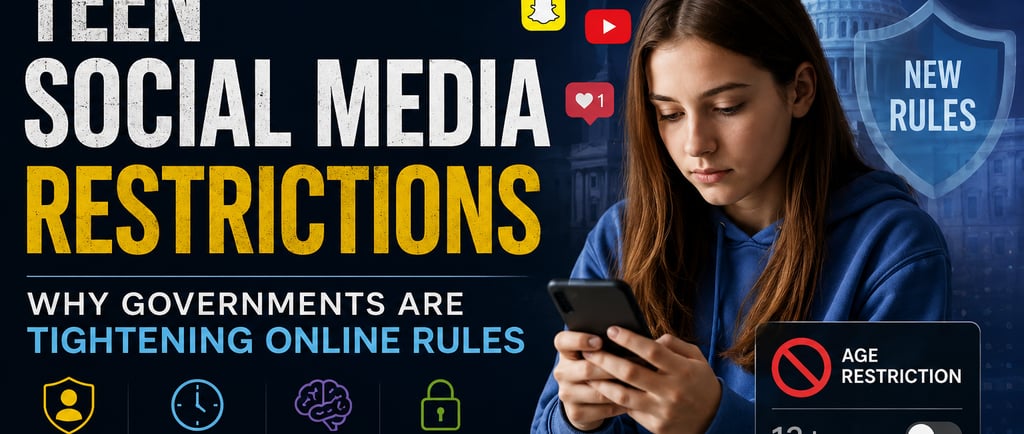
Teen Social Media Restrictions: Why Governments Are Tightening Online Rules
Social media has become a major part of everyday life, especially for teenagers. Platforms like TikTok, Instagram, Snapchat, and YouTube are where young people connect with friends, discover trends, learn new skills, and express themselves. But in 2026, governments around the world are paying closer attention to how teenagers use these platforms.
Several countries are introducing or discussing stricter social media rules for younger users. These proposals aim to improve online safety, reduce harmful content, and encourage healthier digital habits. While many parents and educators welcome these changes, others worry about how they could affect privacy, communication, and freedom of expression.
The debate is growing worldwide, making teen social media restrictions one of the most talked-about topics of 2026.
Why Are Governments Introducing New Rules?
The internet offers endless opportunities, but it also brings challenges. Concerns over cyberbullying, online scams, harmful content, excessive screen time, and mental health have encouraged lawmakers to consider stronger regulations.
Many officials believe that younger users need additional protection while navigating digital platforms. As a result, governments are exploring age verification systems, parental controls, and stricter platform responsibilities.
The goal isn't necessarily to ban social media but to create a safer online environment for teenagers.
How Social Media Could Change
If these regulations continue expanding, teenagers may notice several changes when using their favorite apps.
Possible updates include:
Stronger age verification systems
More parental supervision options
Better privacy settings for minors
Restrictions on personalized advertising
Improved reporting tools
Enhanced protection against harmful content
Many platforms have already started investing in new safety features to meet changing regulations.
The Mental Health Conversation
One of the biggest reasons behind these restrictions is mental health.
Studies have shown that excessive social media use may contribute to anxiety, sleep problems, and low self-esteem for some teenagers. Constant comparisons, unrealistic beauty standards, and pressure to stay online can affect emotional well-being.
At the same time, many experts point out that social media also offers positive experiences, including learning opportunities, creative expression, and supportive communities.
The challenge is finding the right balance.
Why Gen Z Has Mixed Opinions
Not everyone agrees on these new rules.
Some young people believe stronger protections are necessary, especially against cyberbullying and online harassment.
Others argue that strict restrictions may limit access to educational content, career opportunities, and important social connections.
Many Gen Z users believe digital education is just as important as regulation, encouraging responsible online behavior instead of complete restrictions.
Parents and Schools Play an Important Role
Technology alone cannot solve every problem.
Parents, teachers, and schools continue to play a key role in helping teenagers build healthy online habits by encouraging open conversations about digital safety, privacy, and responsible social media use.
Digital literacy is becoming an essential life skill for today's generation.
What Social Media Companies Are Doing
Major platforms have introduced several safety improvements over the past few years.
These include:
Private accounts for younger users
Screen time reminders
Content filtering
Anti-bullying tools
Family supervision features
Stronger reporting systems
As regulations continue evolving, companies are expected to introduce even more protective features.
The Future of Teen Social Media
The future of social media isn't about removing young people from the internet—it's about creating safer digital experiences.
Technology continues to evolve rapidly, and governments, parents, educators, and tech companies all have a role to play in shaping a healthier online environment.
The conversation is likely to continue throughout 2026 as new policies are introduced across different countries.
Final Thoughts
Teen social media restrictions represent one of the biggest digital policy discussions of 2026. While opinions differ, everyone agrees that online safety is becoming increasingly important.
Finding the right balance between freedom, privacy, creativity, and protection will shape the future of social media for millions of young users around the world.
As technology continues to grow, so does the responsibility to ensure that digital spaces remain safe, positive, and accessible for future generations.
Frequently Asked Questions (FAQs)
Why are governments restricting teen social media?
To improve online safety, reduce harmful content, strengthen privacy protections, and support healthier digital habits.
Will teenagers lose access to social media?
Most proposals focus on improving safety rather than completely banning social media access.
Which platforms are affected?
Popular platforms such as TikTok, Instagram, Snapchat, YouTube, and others may introduce new safety features to comply with regulations.
Why is this topic trending?
As more countries debate online safety laws, the issue has become one of the biggest global discussions in technology and youth culture.